
Imagine living with missing teeth or a damaged smile that affects what you eat, how you speak, and when you feel confident enough to laugh. This is where prosthodontics, the architectural branch of dentistry, bridges the gap between oral health and self-confidence.
Prosthodontics is a highly specialized dental discipline focused on designing, fabricating, and placing artificial teeth and oral structures that have been lost or damaged. "Prosthodontics" is derived from the Greek words "prosthesis" (addition) and "odont" (tooth). It is not merely about improving a smile. It is about restoring the complex coordination between your bite, jaw, and facial structures. Whether it is the precision of a single crown, the stability of dental implants, or the life-changing impact of full dentures, prosthodontic treatments blend advanced clinical science with meticulous artistry.
The following information addresses the key definitions, the various types of restorations, and why this specialty is the gold standard for complete oral rehabilitation.
What Is Prosthodontics?
The architectural pillar of restorative dentistry is prosthodontics. It focuses on the complex replacement of missing teeth and the restoration of the oral structure. While general dentistry focuses on preventing and treating tooth decay, prosthodontics addresses the comprehensive restoration of bite function, jaw alignment, and facial aesthetics. This discipline does not describe the mouth as a set of separate teeth but as a single, integrated system, with each restoration needing to be in harmony with the muscles, bones, and nerves of the head and neck.
This high level of harmony in the system cannot be achieved without skills that are well beyond the usual dental degree. Achieving this level of harmony requires advanced expertise beyond dental school. A prosthodontist completes an additional three years of intensive postgraduate training focused on complex restorative care. This stringent stage encompasses knowledge of:
- Biomaterials
- Dental laboratory technology
- Occlusal anatomy
- Temporomandibular joint (TMJ) biomechanics
The level of education transforms a clinician into a specialist who can handle the worst forms of dental trauma, congenital disabilities, and progressive tooth erosion, which general practitioners typically refer to.
This professional mastery creates a clear differentiation between the simple restorative practice and the holistic aspect of prosthodontics. Localized decay can be addressed with a regular filling or a basic crown. However, a prosthodontist would assess it for long-term structural integrity. Their goal is long-term restorative success, functional longevity, mechanical stability, and aesthetic excellence. This two-fold emphasis has the advantage of making a restored smile as resistant to the stresses of chewing as it is aesthetically perfect in a social context.
Because these cases may involve several dental disciplines, the prosthodontist serves as the primary "team lead" or architect. In a complex full-mouth reconstruction, they draft the master treatment plan and liaise with oral surgeons to place implants or with periodontists to treat the gums. Within this multidisciplinary team, the prosthodontist is responsible for ensuring that all surgical and clinical procedures are directed toward the ultimate prosthetic objective. This leadership ensures a smooth transition from the first surgical stage to the final stage of providing a comfortable, functional, and life-changing smile.
Functional Uses of Prosthodontics
The twofold purpose of prosthodontic treatments is not only to restore the mechanics of your mouth but also to help you look your best. These clinical interventions are the foundation of overall oral health, whether it is to restore the ability to eat and talk without pain or to rebuild your smile following an accident.
Restores Oral Function and Overall Health
Once you have lost a tooth, it not only leaves you with a tooth gap in your smile, but it also completely changes your capability to chew food effectively and maintain proper nutrition. Your chewing efficiency is reduced. This forces you to abandon fiber-rich foods like steak, nuts, and crunchy vegetables in favor of a softer, less nutritious diet. By replacing these lost units, a prosthodontist will restore your full masticatory function, enabling you to digest a wide variety of foods and remain in good health.
You also rely on your teeth for clear communication. You use your tongue to articulate clearly because your tongue has to strike certain parts of your teeth to make sharp phonetic sounds. Gaps in your front teeth are often accompanied by irritating lisps or whistles, which may destroy your self-esteem in a work or social setting. With accurate positioning of the fixed or removable prosthetics, you regain the natural phonetic platform so you can speak with ease, without overcompensating for the missing structures.
Beyond their functional benefits, these treatments preserve the foundation of your facial structure by preventing jawbone resorption. After you have lost a tooth root, the bones around it start to deteriorate due to a lack of stimulation, which eventually results in facial collapse, sunken cheeks, and a protruding chin associated with premature aging. When you opt for dental implants, you provide your jaw with the biological stimulation it needs to prevent bone loss, and you preserve your facial volume and youthful contours.
Furthermore, you have an opportunity to have a lasting solution to the chronic pain of temporomandibular joint (TMJ) disorders, which is provided by prosthodontic care. When you bite off-center, the muscles in your jaw have to overwork to compensate, which can lead to frequent headaches and ear pain. With the help of full-mouth reconstruction or by using occlusals, a prosthodontist will redistribute your biting pressure by correcting the alignment of your bite. This realignment will help reduce the continuous pressure on your joints. This can significantly reduce joint strain, alleviate discomfort, and protect remaining teeth from uneven wear.
Improves Your Smile and Appearance
Functional repair is essential. Beyond this, the aesthetic side of the professional branch of prosthodontics restores visual balance and harmony. This allows you to navigate daily life with renewed confidence.
You can have a case of minor cracks, severe discoloration, which is difficult to whiten, or even sharp spikes breaking the flow of your smile. These specialists will use the best of the ceramic and veneers to restore the natural translucency of your enamel. These are not merely solutions that fix your tooth. They enable you to create a smile makeover that matches your face and complexion, effectively erasing years of self-consciousness.
You might also need these services for your fractured or incomplete smile after a sudden physical trauma, like a sports injury or a car accident. In these high-stakes situations, a prosthodontist acts as a reconstruction specialist. They restore your lost or fractured teeth and match them to the exact shape, shade, and contour of your original smile. This is more than just the repair process. The clinician painstakingly matches the new structures to your lip line and the midline of your face so that the outcome appears completely natural rather than artificial.
Beyond injury, you might turn to prosthodontics to manage complex congenital disabilities like a Cleft Lip and palate or ectodermal dysplasia. If a tooth or dental formation is naturally missing or too misshapen, the specialist fills the gaps using custom-engineered prosthetics to form a complete denture arch. When you overcome these genetic issues, the prosthodontist gives you a working, appealing smile that could not have been achieved with conventional dental care methods.
Prosthodontic treatment can deal with the permanent cosmetic harm that is a result of extreme bruxism, or tooth grinding. When you have been grinding your teeth, you have probably lost a large part of your vertical dimension, and your teeth appear short. They could lean around the mouth and collapse. Placing the crowns at the original height of the teeth allows the prosthodontist to make your smile the correct length and provide your face with the necessary vertical support. This extensive restoration gives the facial profile a lift, undoing the eroded appearance and restoring a lively, healthy smile.
Types of Prosthodontic Treatments
To ensure you can meet your specific dental needs, prosthodontics offers a wide range of options that are classified according to how they interact with your current anatomy. It can be a fixed restoration, which stays permanently; removable devices that move to replace missing teeth; or even an ultra-modern maxillofacial restoration, which is used in complicated facial reconstruction.
Fixed Prostheses
Fixed prosthodontics refers to permanent restorations that are cemented or secured in place by a dental specialist. They are fixed in nature, since a specialist fuses or screws them in place, and therefore, they are not intended to be removed by the patient. Fixed prosthodontics include:
- Dental crowns — The first category is the dental crown, or cap, which is used to restore a tooth that has been cracked, heavily decayed, or weakened by a root canal. The crown reshapes the original shape of your tooth by enveloping the whole visible section with high-grade porcelain or zirconia, and it helps in preventing further fracturing of your tooth as a result of biting pressure.
- Dental bridges — If you have lost a tooth or teeth in a row, consider a dental bridge to bridge the gap. This prosthesis is anchored to the natural teeth on both sides of the space, called abutments, and the artificial tooth, called a pontic, is held by these abutments. Although bridges provide an easier way to restore your smile and ensure that the remaining teeth do not move out of place, you have to consider that the healthy anchor teeth have to be reshaped so they can fit the crowns. For a more conservative approach that leaves neighboring teeth untouched, you can opt for an implant-supported bridge. Its stability is supported by titanium posts rather than your own natural enamel.
- Dental implants — For individuals seeking the best of both health and longevity, dental implants are the gold standard of tooth replacement today. A dental implant replaces the natural tooth root with a biocompatible titanium post that integrates directly with the jawbone. Implants will give you a solid foundation, whether you are replacing a single tooth or the whole arch. They are virtually identical to natural teeth in terms of strength and appearance. Since the implant improves the functionality of your bone just like a natural root, it is the only fixed solution that actively averts bone loss, which is usually the result of the loss of teeth.
- Inlays or onlays — When your tooth damage is too extensive for a standard filling but not severe enough to require a full crown, you benefit from inlays and onlays. These are often referred to as indirect fillings. They are tailor-made in a laboratory to fit the exact footprint of the cavity. An inlay can be placed into the grooves of your tooth, but an onlay, also known as a partial crown, goes over one or more of your chewing cusps. When you use these artificial restorations, you save more of your natural tooth structure. You also have a much stronger, more durable surface than a traditional composite filling can offer.
- Porcelain veneers — You can achieve a total aesthetic overhaul. These are wafer-thin shells of ceramic that a prosthodontist meticulously bonds to the front surfaces of your teeth. They correct minor misalignments, stubborn stains, or uneven tooth lengths. Veneers are the most conservative yet transformative of all methods for getting a Hollywood smile. They require only a small portion of enamel. Veneers are a good option because they give your smile a natural, colorful makeover rather than an artificial one. They do so by matching the translucency of your natural teeth.
Removable Prostheses
Removable prosthodontics provide you with more options to replace your oral functioning through the delivery of non-invasive solutions that can replace lost teeth or even teeth in an arch. These devices are easily removable for washing and servicing, unlike permanent restorations. They come in different options, namely:
- Complete dentures — These provide a full replacement for fully edentulous individuals, that is, missing all teeth on either the upper or lower jaw. These prosthetics are based on a fusion of natural suction and the shapes of your ridges on the bone. They hold the prosthetics in place, giving you a working set of teeth you can use day-to-day.
- Partial dentures — You use partial dentures when you need to replace several missing teeth while retaining the remaining healthy ones. Conventional braces have a robust metal frame with small clips attached to your natural teeth to keep them secure. However, if you want something more aesthetic and comfortable, go for flexible partials. They are made of a lightweight biocompatible thermoplastic. The material integrates with the native gum tissue, so no visible metallic elements are required, and it feels more natural. In the short term, say, while you are waiting for an implant to heal, a temporary partial denture, sometimes called a flipper, will work. This lightweight temporary denture fits into the gap in your smile in no time.
- Overdentures — With overdentures, also known as snap-on dentures, you can significantly improve their performance. Unlike conventional dentures, which can slip or require sticky adhesives, overdentures snap directly onto two or more dental implants. This design gives you a considerably greater degree of stability and biting capacity because the implants securely hold the appliance in position. With the affordability of a denture and the structural integrity of implants, you can get a solution that helps you overcome the fear of your teeth moving when you eat or talk. It also significantly improves your overall quality of life.
Maxillofacial Prosthodontics
When you are confronted with the loss of facial organs through brutal cancer surgery, severe traumas, and birth deformities, you need the services of the most specialized maxillofacial prosthodontics. This subspecialty is not confined solely to the teeth but also replaces missing bone and soft tissue in the jaw and face. For example, in case you have a hole in the roof of your mouth due to a cleft palate or removal of a tumor, a prosthodontist can create an obturator. This dent is used as a seal, enabling you to talk and eat normally so you do not swallow food or air into your nose.
Outside the mouth, these experts recreate your physical self by making realistic facial masks. They can make you an artificial eye, ear, or nose with medical-grade silicone and bone anchors that match your skin color and contours with such detail. With these sophisticated prosthetics, you are not only able to return to your former appearance but also to move through society without the physical burden on the surface, with the most complex stage of oral and facial rehabilitation accomplished.
Find a Prosthodontics Specialist Near Me
Whether you are looking to replace a single missing tooth or to transform your smile, prosthodontics offers the perfect blend of restorative science and artistic precision. Be it durable implants or hand-crafted veneers, all these treatments not only seal gaps but also restore your confidence and improve your speech, not to mention safeguard your future oral health. You do not have to settle for a smile that feels incomplete.
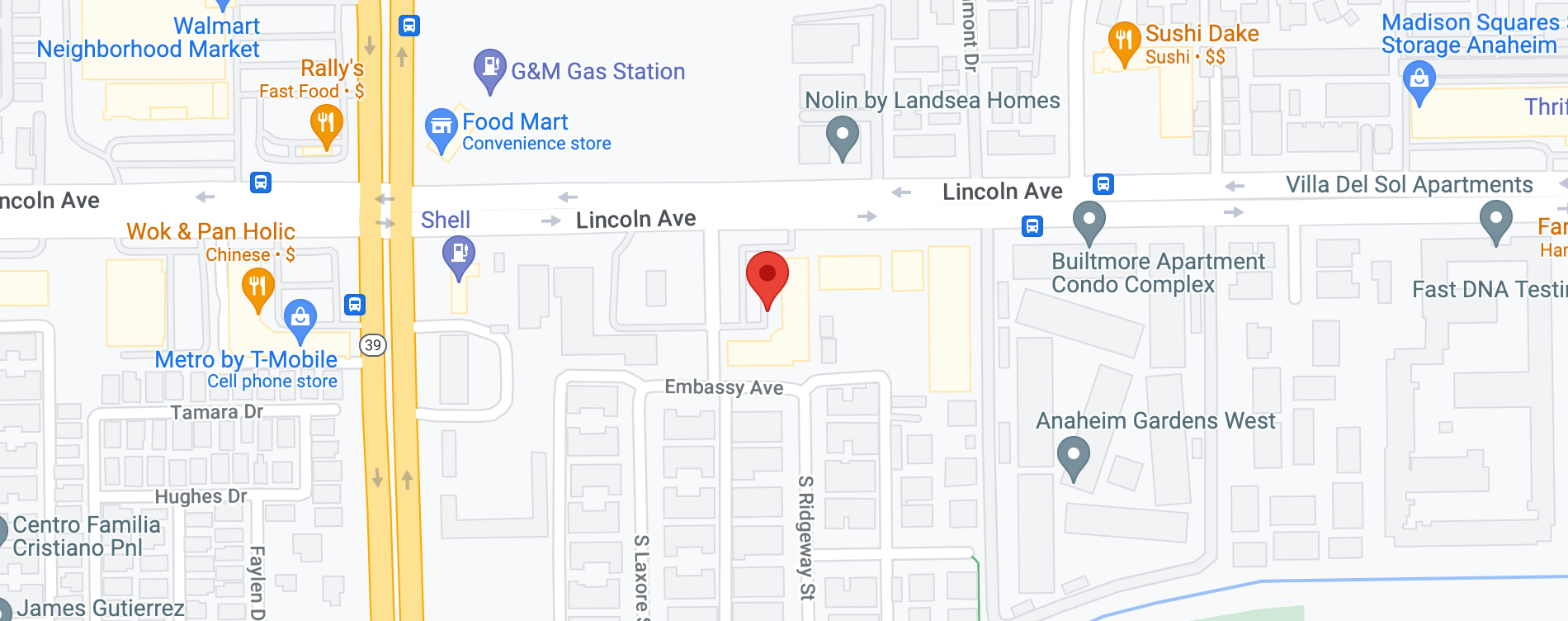
At Beach Dental Care Anaheim, our experienced team provides personalized prosthodontic care tailored to your individual needs. Call us today at 714-995-4000 and schedule your appointment. Take the first step towards a functional, radiant smile you will be proud to show off.